
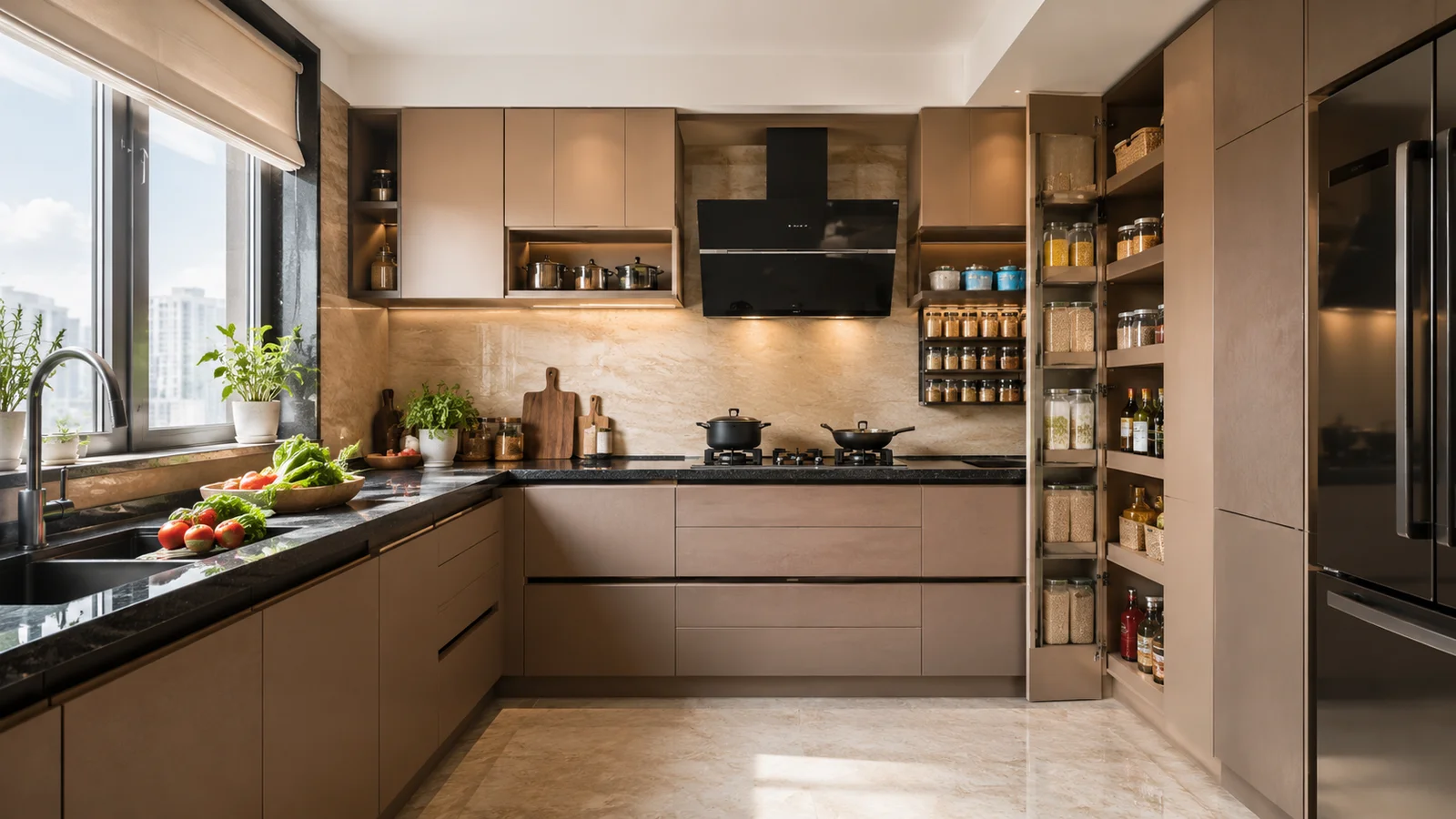
Designing a modular kitchen that truly supports Indian cooking means thinking beyond appearance! Our kitchens face high heat, oil splashes, strong aromas, and the need to prepare multiple dishes at once. To create a space that remains efficient and durable, proper planning is essential. You can work with a Modular Kitchen Designer in Ahmedabad, the best interior designer in Ahmedabad, or design the space on your own — the fundamentals remain the same.
Here’s How You Can Create The Best Kitchen Layout For Indian Homes In 2026!
1) Start With The Right Work Triangle
Indian cooking usually involves multitasking, which makes the classic work triangle — hob, sink, and refrigerator, extremely important! Keeping the stove and sink close allows smooth switching between washing, cutting, boiling, and sautéing. The refrigerator should be slightly apart but still easy to reach when you need vegetables, masalas, or fresh ingredients. A well-planned work triangle improves movement, avoids unnecessary walking, and reduces the chance of overcrowding.
2) Add Smart Zoning For Indian-Style Food Prep
Instead of placing cabinets and appliances randomly, divide the kitchen into thoughtful zones based on your daily routine. A prep zone near the sink helps with washing vegetables, chopping, and dough preparation. The cooking zone must include the hob, the chimney, and everyday essentials such as oil, ladles, and spices. The cleaning zone should keep the sink, waste bin, and dishwasher together so they don’t interfere with food preparation. A proper storage zone for grains, pulses, dry snacks, and masalas keeps the kitchen organised.
3) Prioritise Heat & Oil-Resistant Materials
Indian kitchens experience continuous steam and oily residue, making material selection extremely important. Cabinets made from boiling-water-resistant plywood or HDHMR boards ensure durability. Countertops made of granite or quartz can handle hot pots, heavy chopping, and grinding. A strong chimney with 1200–1500 m³/hr suction is essential to manage the smoke and aroma created during tadkas and frying. A dependable modular kitchen designer in Ahmedabad will always suggest materials that withstand heavy, everyday use.
4) Make Storage Your Highest Priority
Indian kitchens require plenty of storage for utensils, cookware, and groceries. Deep drawers work best for large vessels, pressure cookers, and kadhais, while wide top drawers keep masalas and daily-use tools accessible. Tall pantry units help store grains, flour, and bulk groceries neatly. Corner spaces can be maximised with carousel units or magic corners, ensuring no area goes unused.
5) Match The Layout To Your Home & Lifestyle
The ideal modular kitchen layout for Indian cooking in Ahmedabad depends on your home size and cooking pattern. L-shaped kitchens suit smaller apartments, while U-shaped kitchens support heavy daily cooking and shared use. Parallel kitchens boost efficiency for fast-paced meal preparation, and Island kitchens are great for modern homes where cooking blends with family interaction. Choosing the right layout ensures your kitchen supports quick weekday meals and festive cooking alike.
In A Nutshell
A well-planned modular kitchen becomes a natural extension of your cooking style, helping you move with ease and confidence every day. When each zone, surface, and storage area is thoughtfully placed, the kitchen works with you instead of slowing you down. Contact us with Stellar Interior and let’s build a space that feels practical, welcoming, and truly aligned with real Indian cooking habits.